
A hurricane has passed. You walk outside and see that your pool cage has taken a hit. Your first instinct might be to start cleaning up or call someone to fix it immediately. But if you want your insurance claim to succeed, the very first thing you must do is stop and document everything.
The difference between a paid claim and a denied one often comes down to documentation. Insurance adjusters need clear, compelling evidence that the damage was sudden, storm-related, and not pre-existing. This guide will walk you through exactly how to build that evidence file.
This article is part of our comprehensive series on pool enclosure insurance. For a complete overview, read our Florida Homeowner’s Complete Guide to Pool Cage Insurance & Storm Claims.
Why Documentation is the Make-or-Break Factor
Insurance companies are in the business of managing risk. An adjuster’s job is to determine whether the damage is covered. Without strong documentation, they have room to argue that the damage was pre-existing, caused by wear and tear, or not as severe as claimed.
Your documentation is your evidence. The stronger your evidence, the harder it is to deny your claim.
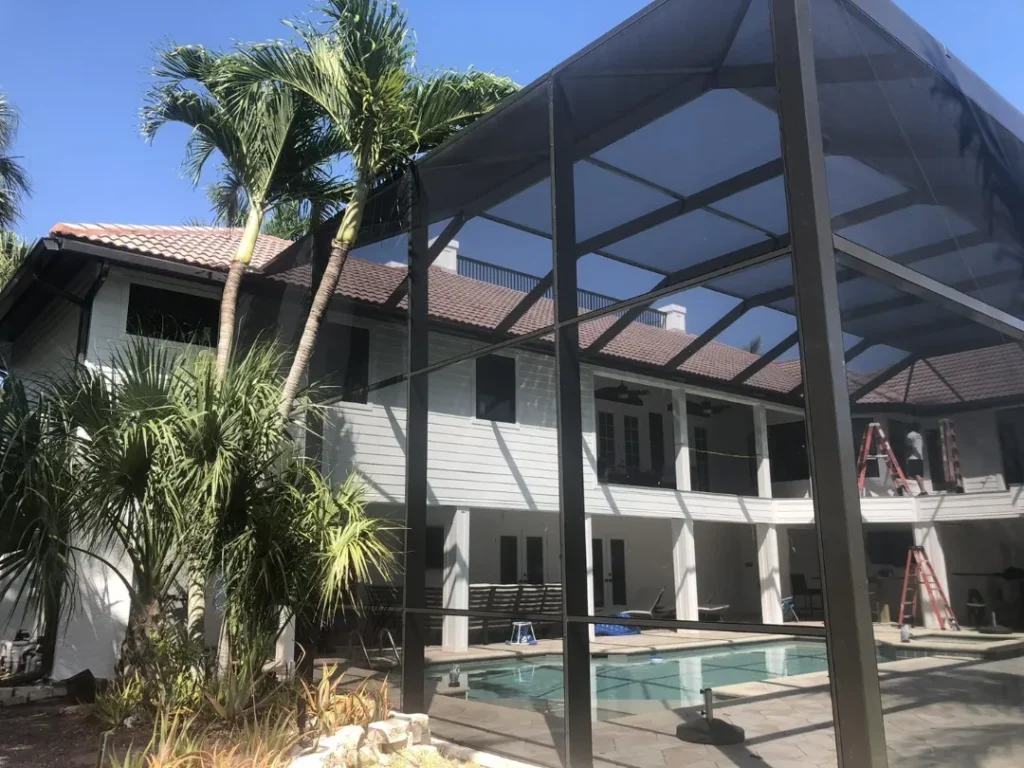
Step 1: The “Before” — Why Pre-Storm Photos Are Everything
The single most powerful piece of documentation you can have is a set of clear, dated photos taken before the storm. If you have them, you can prove definitively what your enclosure looked like before the event.
What to photograph before a storm:
- Wide shots of the entire enclosure from all four corners of the property.
- Close-up shots of the screen panels, showing they were intact.
- Close-up shots of the fasteners and frame, showing they were free of significant rust.
- Any existing minor damage that was already present (to avoid it being blamed on the storm).
If you do not have pre-storm photos, start taking them now so you are prepared for the next event. Your phone’s camera automatically timestamps every photo, which is all the proof you need.
Step 2: The “After” — How to Document Post-Storm Damage
Once the storm has passed and it is safe to go outside, do not touch anything until you have completed your documentation. Here is the exact sequence to follow.
Wide-Angle Shots First
Start with the big picture. Take clear, wide-angle photos of the entire enclosure from all four sides of the property. These establish the overall scope of the damage.
Close-Up Shots of Every Damage Point
Walk the entire perimeter and photograph every single point of damage. For each damaged area, take at least two shots: one from 6-8 feet away to show context, and one close-up to show the specific damage.
- Torn or missing screen panels.
- Bent, cracked, or collapsed aluminum beams.
- Broken or pulled-out fasteners.
- Damage to the base anchors where the cage meets the concrete.
- Any impact points where debris struck the structure.
Document the Cause
If a tree branch fell on your cage, photograph the branch still in place before you move it. If wind-borne debris caused the damage, photograph the debris. This establishes the direct cause of the damage.
Take Video
Walk the entire perimeter of the enclosure while narrating what you see. Video provides context that still photos cannot. Describe the damage out loud as you film it.
Step 3: Get a Professional Contractor Assessment
After you have documented the damage yourself, call a licensed, local contractor for a professional assessment. This is not just about getting a repair quote — it is about getting professional documentation.
A reputable contractor like What The Bruck will provide you with a detailed, itemized written estimate that describes the specific damage, the materials required to repair it, and the cost. This document is critical for your insurance claim because it:
- Provides a professional, third-party assessment of the damage.
- Gives the adjuster a clear scope of work to evaluate.
- Establishes the fair market cost of the repair.
Do not sign any repair contracts until after your adjuster has inspected the damage. The estimate is for documentation purposes at this stage.
Step 4: What NOT to Do
Knowing what to avoid is just as important as knowing what to do.
| Do This | Do NOT Do This |
|---|---|
| Take extensive photos and video before touching anything. | Start cleaning up or removing debris before documenting. |
| Call your insurance company promptly to open a claim. | Wait weeks to report the damage. |
| Get a written estimate from a licensed local contractor. | Accept a verbal quote from a door-to-door contractor. |
| Cover holes with a tarp to prevent further damage. | Make permanent repairs before the adjuster inspects. |
| Keep all receipts for any emergency protective measures. | Sign a contract with a contractor who "handles the insurance." |
We’re Here to Help You Through the Process
At What The Bruck, we work with homeowners throughout Lakeland and Polk County to navigate the insurance claim process after a storm. We provide the professional, detailed documentation that insurance companies require, and we work transparently with you and your adjuster.
If your pool cage has been damaged, call us first. We will assess the damage, provide a professional written estimate, and help you understand your options — whether that means a targeted repair or a full replacement.