
It’s one of the most debated topics among Florida homeowners as a storm approaches: should you cut your pool screens to save the aluminum structure?
The idea seems logical—let the wind pass through to relieve pressure. But this common piece of advice is a myth, and following it can lead to voided warranties, denied insurance claims, and unnecessary damage.
As the trusted experts in Lakeland and Polk County, we’re here to give you the definitive answer based on engineering and our 20+ years of experience.
This article is part of our comprehensive series on pool enclosure maintenance. For a deep dive into insurance, storm prep, and more, read our Florida Homeowner’s Complete Guide to Pool Cage Insurance & Storm Claims.
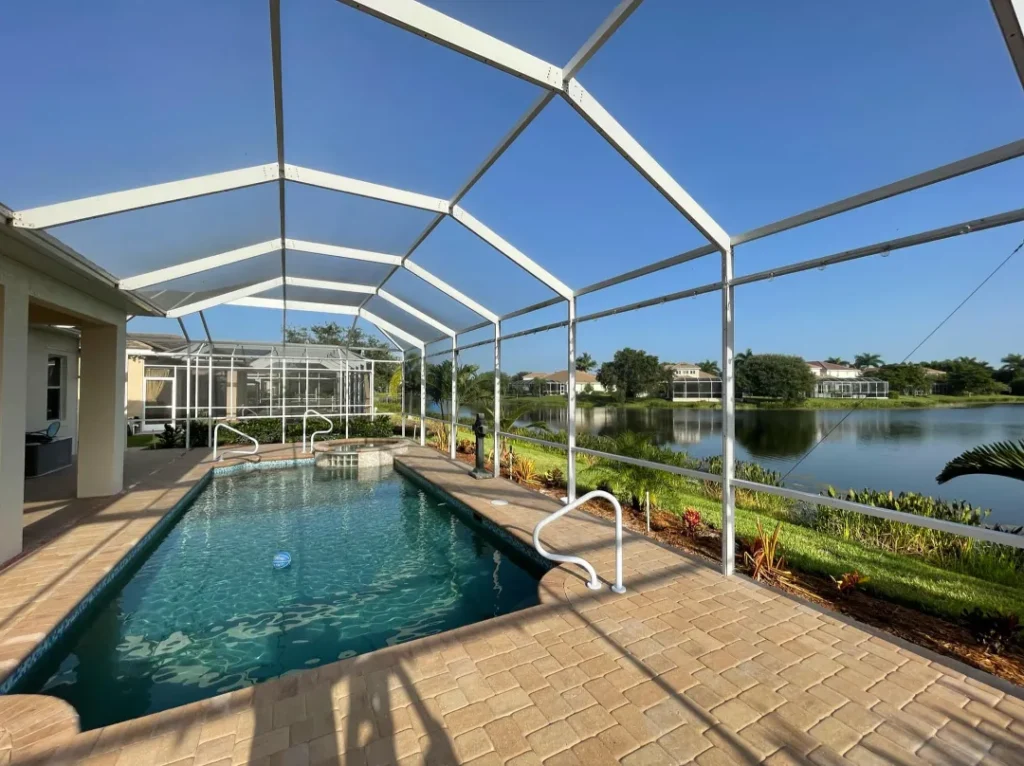
The Myth: Relieving Pressure by Cutting Screens
The theory is that by cutting large slits in your screen panels, you allow the destructive hurricane-force winds to pass through the enclosure rather than pushing against it. In reality, this does very little to change the overall wind load on the structure.
Modern pool enclosures are designed by engineers to meet Florida’s strict building codes. These codes account for wind loads on both the screens and the aluminum frame. The structure is designed to work as a complete system. When you cut the screens, you are altering that system in a way the engineers never intended.
Why Cutting Your Screens is a Bad Idea
1. It Can Void Your Warranty
Most warranties for pool enclosures, whether from the builder or the material manufacturer, are voided if you intentionally damage the product. Cutting your screens is intentional damage. If you have a warranty, you are likely throwing it away.
2. It Can Lead to a Denied Insurance Claim
Insurance covers sudden and accidental damage. Intentionally cutting your screens is neither. If your cage is damaged in a storm and the adjuster sees that the screens were cut, they have a clear reason to deny your claim. You can’t intentionally damage your property and then ask the insurance company to pay for it.
3. It Doesn’t Solve the Real Problem
The catastrophic failure of a pool cage in a hurricane is rarely due to wind pressure on the screens alone. It’s almost always due to one of two things:
- Structural Failure: The aluminum frame itself fails, usually at connection points where fasteners have rusted and weakened over time.
- Impact from Debris: A tree limb or loose patio furniture strikes the enclosure, causing a catastrophic breach.
Cutting your screens does nothing to prevent either of these scenarios.
The Real Solution: A Well-Maintained Structure
Instead of damaging your own property, the best way to prepare your pool cage for a hurricane is to ensure it is structurally sound before the storm arrives.
A well-maintained pool cage with strong, rust-free fasteners and a solid frame is designed to withstand hurricane-force winds. The screens are designed to be the first point of failure—it is far cheaper and easier to replace a few torn screen panels than to rebuild an entire collapsed structure.
As we detail in our Pre-Storm Checklist, the most important steps you can take are:
- Inspecting and replacing rusted fasteners.
- Ensuring the frame is free of corrosion and damage.
- Clearing the pool deck of all loose items.
The Verdict: Do Not Cut Your Screens
Let us be unequivocal: No, you should not cut your pool screens before a hurricane. It is an outdated and ineffective practice that can cost you thousands in denied claims and voided warranties.
The proper way to protect your investment is through regular inspection and maintenance. If you are concerned about the integrity of your pool cage, the time to act is now, not minutes before a storm makes landfall.
Our team at What The Bruck can provide a professional inspection to identify any weak points in your enclosure and recommend the necessary repairs to ensure it’s ready for whatever the season brings.